
Does Music Define Us? Listwa Karnaval Explores Rhythm, Language and Identity
Saint Lucia’s Carnival season officially began with an evening of thoughtful discussion, cultural reflection and musical exploration as the Carnival Management and Planning Committee (CMPC), in partnership with title sponsor Bank of Saint Lucia, hosted the second installment of Listwa Karnaval at Harbour Club.
Free and open to the public, the event invited attendees to explore a compelling question: Does our music define us?
The evening opened with a rendition of Dezral’s “The Car” performed by former National Carnival Queen Shan Lucien on piano, accompanied by drums. The audience was then treated to a performance by Umpa, who blended Dennery Segment with contemporary instrumentals, giving the set a distinctive and refreshing feel. These performances set the tone for a night dedicated to examining Saint Lucian music, culture and identity.
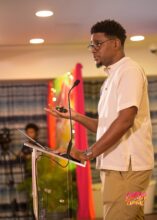
The keynote lecture was delivered by Saint Lucian Dr. Ronald T. Francis of the University of the West Indies Cave Hill Campus, Barbados. A linguist and researcher whose work explores the relationship between language, culture and popular music, Dr. Francis immediately captured the audience’s attention with a presentation that was both informative and engaging.
Drawing from his expertise in linguistics and social justice, Dr. Francis explored the origins and development of Dennery Segment while examining its place within Saint Lucian society. Throughout the lecture, he frequently referenced his role “as an academic” and “as a linguist,” grounding his observations in extensive research while maintaining an approachable and often humorous delivery style.
One particularly memorable example of this research was his admission that he had listened to more than 80 Dennery Segment songs over a three-week period as part of his preparation. The effort highlighted the depth of his commitment to understanding the genre from both a scholarly and cultural perspective. His ability to balance academic analysis with humour and relatable examples kept the audience engaged throughout the presentation.
Central to the lecture was the relationship between language and music. Dr. Francis noted that many Dennery Segment songs incorporate English, Saint Lucian English Creole (SLEC) and Kwéyòl, arguing that the use of these languages contributes significantly to the genre’s authenticity. He observed that approximately 64 percent of the songs examined incorporated these linguistic elements, reinforcing Dennery Segment’s uniquely Saint Lucian character.
The discussion also challenged common assumptions surrounding the genre. While Dennery Segment is often viewed as a modern musical movement, Dr. Francis drew connections between contemporary lyrics and the traditions of Saint Lucian folk music. He highlighted similarities in storytelling techniques, humour and lyrical double meanings, suggesting that many of the genre’s defining characteristics have deeper roots within the island’s cultural history.
The sensual nature of Dennery Segment was also addressed during the lecture. Referencing both his research and conversations with young Saint Lucians, Dr. Francis acknowledged that these themes remain popular among audiences. At the same time, he challenged local artistes to continue developing the genre by expanding the range of stories and experiences reflected within its lyrics.
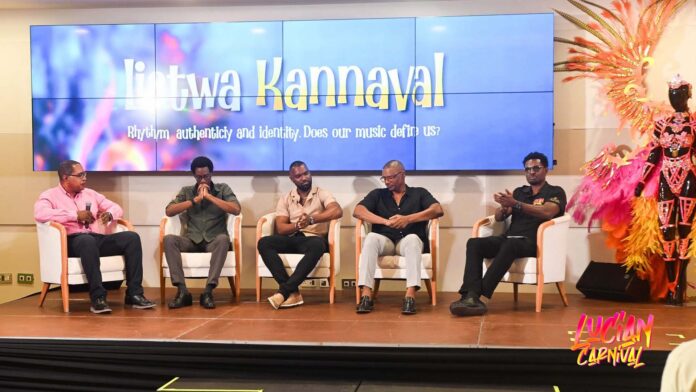
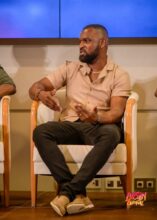
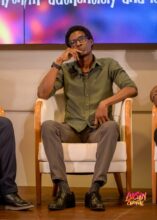
Following the lecture, a panel discussion provided additional perspectives on the evolution of Dennery Segment and its place within Saint Lucian culture.
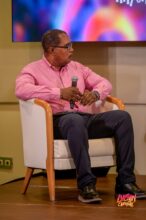
Moderated by Teddy Francis, Executive Director of the Cultural Development Foundation, the panel featured Jason Joseph, Curriculum Officer for Music at CAMDU; Winston F. Phulgence, Vice Principal of Academics at Sir Arthur Lewis Community College; Lance “Sir Lancealot” Mongroo, DJ, producer and Carnival ambassador; and Jason Darius “Jammin,” media professional and cultural practitioner from Dennery.
The discussion became particularly animated when Dr. Winston F. Phulgence stated that “Dennery Segment is not a Carnival sound.” The comment immediately sparked whispers throughout the audience and prompted a passionate exchange among the panelists.
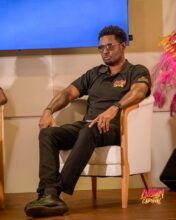
Lance Mongroo, widely recognised as a pioneer of the genre and the individual credited with coining the term “Dennery Segment,” argued that the genre has earned its place within Carnival culture. He pointed to its widespread popularity and the success of Dennery Segment songs in local competitions, including recent victories at the Soca Monarch competition.
In response, Dr. Phulgence clarified that his statement was not intended to diminish the genre’s importance. Instead, he argued that Dennery Segment should be viewed as something even larger than Carnival. Originating outside of the traditional Carnival framework, he suggested that it has evolved into an authentic Saint Lucian genre in its own right, much like Bouyon has become synonymous with Dominica.
For many attendees, this discussion highlighted the broader themes explored throughout the evening: authenticity, cultural ownership, language and identity.
Do we define music? Yes. Does music define us? Also yes.
Perhaps that was the evening’s most important takeaway. Music reflects the language, experiences and values of the people who create it, while simultaneously shaping how future generations understand their culture and identity . In that sense, music and society exist in a continuous dialogue, continuously shaping and reshaping one another.
As the first official event of Saint Lucia’s Carnival season, Listwa Karnaval set a reflective and intellectually engaging tone for the celebrations ahead. Through engaging presentations, thoughtful discussion and outstanding performances, the event provided an opportunity to reflect on the sounds that continue to shape the nation’s cultural story.