
The Mighty Sparrow: Seven Decades and Beyond — The Legacy of a Caribbean Musical Giant
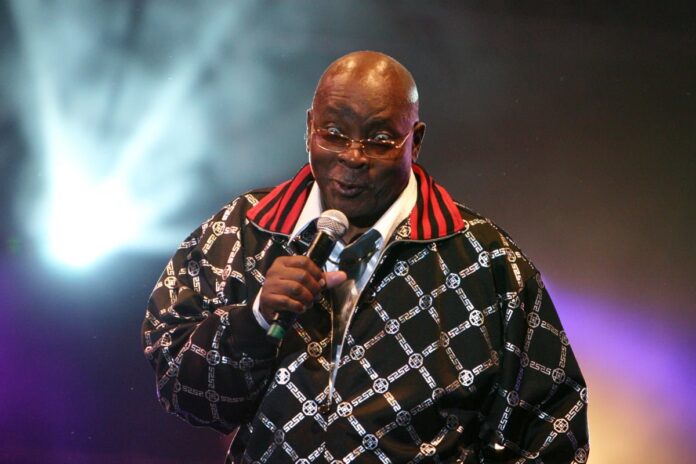
Slinger Francisco, the Grenadian-born Trinidadian who became the “Calypso King of the World,” helped carry Caribbean music from the calypso tents of Trinidad to audiences across the globe.
There are artists who have successful careers, artists who define generations, and then there are artists whose names become inseparable from the history of their music.
The Mighty Sparrow — born Slinger Francisco — belongs firmly in the third category.
Born in Grand Roy, Grenada, on 9 July 1935, and raised in Trinidad from childhood, Sparrow became one of the most influential and recognisable figures in Caribbean music. His career stretched across more than seven decades, producing hundreds of songs, more than 70 albums according to his official biography, eight Calypso Monarch titles and eight Carnival Road March victories.
His music could make audiences laugh, dance, argue and think. He sang about politics, relationships, sexuality, race, migration, colonialism, social conditions, Caribbean identity and everyday life. He could be mischievous and provocative, but behind the humour was a songwriter with an extraordinary understanding of the power of the calypso form. Following his death on 27 September 2026 at the age of 91, Sparrow leaves behind more than a catalogue of recordings. He leaves an enormous piece of Caribbean cultural history.
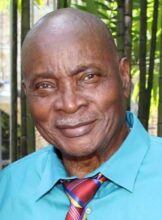
From Grenada to Trinidad
Slinger Francisco was born in Grenada but moved with his mother to Trinidad as a young child. It was there, particularly in the Laventille area of Port of Spain, that the young Francisco developed his relationship with music. He began performing while still young and joined a steelband as a teenager. His energetic performances earned him the nickname “Little Sparrow,” which eventually became the stage name that would follow him throughout his career. The young performer entered a Trinidadian musical culture where calypso was already much more than entertainment.
Calypso was journalism, It was social commentary, It was political conversation, It was humour and It was history told through rhythm.
The National Library and Information System Authority of Trinidad and Tobago describes calypso as a tradition built around elements including rhythm, call-and-response, improvisation and satire. By the time Sparrow emerged in the 1950s, the form had already produced giants including Lord Kitchener, Lord Invader and the Roaring Lion. Sparrow was about to become one of its defining voices.
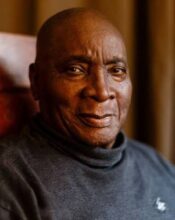
1956: The Arrival of The Mighty Sparrow
Sparrow’s breakthrough came in 1956, when he exploded onto the Trinidad Carnival scene with “Jean and Dinah,” also known as “Yankees Gone.” The song became an instant sensation. It commented on the departure of American servicemen from Trinidad and the social and economic consequences surrounding the closure of the Chaguaramas military base. But Sparrow’s approach was distinctly Sparrow. He took a major social development and transformed it into something humorous, provocative, memorable and unmistakably Caribbean. That same year, he captured both the Calypso King title and the Road March title, immediately announcing himself as a major force. The significance of that moment cannot be overstated. A new generation had arrived.
And the name Mighty Sparrow would soon become known far beyond Trinidad.
The 1950s: Building the Sparrow Legend
Sparrow’s early career was marked by competition, experimentation and a determination to establish better conditions for calypsonians. Following his 1956 victory, he became involved in efforts to challenge the relatively low financial rewards available to performers. His protest over the prize money associated with the Calypso King competition contributed to a wider boycott movement among calypsonians.
This was an important part of Sparrow’s development. He wasn’t simply interested in winning competitions. He understood the importance of the artist’s position within the music industry. His growing popularity also brought international ambitions. In the late 1950s he travelled to the United States with fellow calypsonian Lord Melody, seeking to reach the growing American market. Although the anticipated breakthrough did not immediately materialise, Sparrow continued to build an international career.
The 1960s: The Catalogue Expands
The 1960s demonstrated just how versatile Sparrow could be. His songs continued to address Caribbean society while expanding into subjects that reached beyond Trinidad. Among the defining recordings associated with this period were:
- “Ten to One Is Murder”
- “Mae Mae”
- “Federation”
- “Sparrow Come Back Home”
- “Dan Is the Man in the Van”
- “Kennedy”
- “Congo Man”
- “The Slave”
- “Mr. Walker”
Several of these songs have become part of the recognised canon of Caribbean music.
The National Library of Trinidad and Tobago’s listing of significant 20th-century calypso recordings includes Sparrow’s “Jean and Dinah,” “Federation,” “Dan Is the Man,” “Drunk and Disorderly” and “Ten to One Is Murder.” His productivity was extraordinary. His official biography states that he wrote more than 500 songs and recorded more than 70 albums during a career spanning seven decades.
Sparrow and the Power of Storytelling
What made Sparrow different was not simply his voice. It was his ability to tell a story. A Sparrow song often had characters, conflict, humour and a point of view. He understood that a song did not necessarily have to lecture an audience to make them think. Sometimes you could make people laugh first. Then make them realise what they had just heard. That technique became central to his identity as a calypsonian.
His work frequently explored the contradictions of Caribbean society. Politics could sit beside sexuality. Social criticism could sit beside comedy. National pride could sit beside criticism of national institutions. This was part of the tradition of calypso, but Sparrow developed his own unmistakable voice within it. As Pitchfork observed in its discussion of his work, calypso could function as current affairs delivered through dance music, using rhythm and entertainment as a vehicle for commentary. That description helps explain why Sparrow’s work has survived beyond the individual Carnival seasons in which many of his songs were first released.
The 1970s: Sparrow at the Centre of Caribbean Music
By the 1970s, Sparrow was no longer simply a successful Trinidadian calypsonian. He was an international Caribbean recording artist. He continued winning major titles, taking the Calypso Monarch crown in:
1972 — “Drunk and Disorderly” and “Rope”
1973 — “School Days” and “Same Time, Same Place”
1974 — “We Pass That Stage” and “Miss Mary”.
These victories formed part of a remarkable competitive record that ultimately produced eight Calypso Monarch titles. The 1970s also saw Sparrow broaden his international recording work. In 1968 he had recorded with Jamaican bandleader Byron Lee and the Dragonaires, and their version of “Only a Fool Breaks His Own Heart” eventually became an international success, reaching No. 2 in the Netherlands in 1978 after a re-release.
Sparrow was demonstrating something important:
A Caribbean artist could remain rooted in Carnival culture while making music that could travel internationally.
Sparrow and the Birth of the Soca Era
Any discussion of Sparrow’s legacy must also consider soca, But history matters here. Sparrow did not invent soca.
The National Library of Trinidad and Tobago identifies Lord Shorty — later Ras Shorty I — as the key figure in the emergence of soca during the 1970s, through experiments combining calypso with East Indian rhythms and instruments including the dholak, tabla and dhantal.
What Sparrow did was demonstrate that a major calypsonian could adapt as Caribbean popular music changed. As soca became increasingly dominant in Trinidad and Tobago’s Carnival environment during the late 1970s and early 1980s, Sparrow incorporated elements of the changing sound into his own musical approach. That adaptability is an important part of his legacy. Sparrow belonged to the generation that created the foundation. Artists such as Lord Shorty, SuperBlue and others pushed the music into new territory.
Then subsequent generations — including Machel Montano, Destra Garcia, Bunji Garlin, Fay-Ann Lyons and many others — continued evolving Caribbean music for new audiences. The National Library records this progression from calypso into soca and its later forms.
Sparrow therefore sits within the larger story of an evolving Caribbean musical culture rather than outside it.
1984: “Doh Back Back”
One of the clearest examples of Sparrow’s ability to remain relevant came in 1984, when he won his eighth Carnival Road March title with the soca-influenced “Doh Back Back.” Think about that achievement. Sparrow had already been a major star for almost three decades. Yet he was still capable of producing music that could compete in the rapidly changing Carnival environment. His Road March victories stretched from 1956 to 1984, demonstrating remarkable longevity across changing generations, musical styles and Carnival cultures.
1992: The Final Calypso Monarch Crown
Perhaps one of the most remarkable chapters of Sparrow’s competitive career came in 1992.
At an age when many performers from his generation had already stepped away from the major competitions, Sparrow returned to win the Calypso Monarch title with “Both of Them” and “Survival.” It was his eighth Calypso Monarch crown.
His championship years were:
| Year | Winning selections |
|---|---|
| 1956 | “Yankees Gone” |
| 1960 | “Ten to One Is Murder” / “Mae Mae” |
| 1962 | “Sparrow Come Back Home” / “Federation” |
| 1963 | “Dan Is the Man (In the Van)” / “Kennedy” |
| 1972 | “Drunk and Disorderly” / “Rope” |
| 1973 | “School Days” / “Same Time, Same Place” |
| 1974 | “We Pass That Stage” / “Miss Mary” |
| 1992 | “Both of Them” / “Survival” |
The eight victories span 36 years, from 1956 to 1992.
That statistic alone tells a remarkable story about longevity.
The Mighty Sparrow Timeline
1935
Slinger Francisco is born in Grand Roy, Grenada.
1937
He moves to Trinidad as a young child and grows up in Port of Spain.
1950s
He begins developing his career in calypso and earns the stage name Sparrow through his energetic performances.
1956
“Jean and Dinah” / “Yankees Gone” becomes his breakthrough recording. Sparrow wins the Calypso King and Road March titles.
1960
Wins his second Calypso King title with “Ten to One Is Murder” and “Mae Mae.”
1962–1963
Wins consecutive Calypso King titles with “Sparrow Come Back Home” / “Federation” and “Dan Is the Man” / “Kennedy.”
1968–1969
Works with Byron Lee and the Dragonaires. “Only a Fool Breaks His Own Heart” becomes an international success.
1972–1974
Wins three consecutive Calypso Monarch titles.
1970s
Expands his international recording and touring career and becomes increasingly established among Caribbean audiences in North America, Britain and elsewhere.
1984
Wins his eighth Road March title with “Doh Back Back.”
1985
Wins the Calypso King of Kings competition in the United States.
1987
Receives an honorary Doctor of Letters from the University of the West Indies.
1992
Returns to the top of the Trinidad Calypso competition, winning his eighth Calypso Monarch title with “Both of Them” and “Survival.”
1993
Receives the Chaconia Medal Gold.
2001
Receives the Order of the Caribbean Community.
2014
Receives the Order of the Republic of Trinidad and Tobago.
2015
Receives an OBE in the United Kingdom’s Birthday Honours.
2019
Receives the GlobalFEST Lifetime Artist Award.
27 September 2026
Slinger Francisco, The Mighty Sparrow, dies in New York at the age of 91.
Key Songs That Help Tell the Sparrow Story
It is almost impossible to reduce such a vast catalogue to a handful of songs, but several recordings provide important entry points into his career.
Jean and Dinah / Yankees Gone
The breakthrough.
It announced Sparrow as a major Carnival voice and demonstrated his ability to turn current affairs into memorable calypso.
Ten to One Is Murder
A darker and more personal piece that demonstrated Sparrow’s willingness to tackle difficult subjects.
Federation
A song connected to Caribbean political identity and regional unity, reflecting Sparrow’s interest in the wider Caribbean beyond Trinidad.
Dan Is the Man
Another example of his ability to build character and narrative into a calypso.
Congo Man
One of Sparrow’s most discussed and controversial recordings, demonstrating his willingness to push boundaries and provoke audiences.
Only a Fool Breaks His Own Heart
His collaboration with Byron Lee showed that Sparrow could move successfully beyond traditional calypso settings into a more broadly accessible Caribbean pop sound.
Drunk and Disorderly
A song associated with both his 1972 Calypso Monarch victory and Road March success.
Doh Back Back
A soca-influenced recording that helped Sparrow claim his eighth Road March title in 1984.
Both of Them / Survival
The songs that delivered his final Calypso Monarch crown in 1992.
Sparrow’s Influence on Today’s Caribbean Artists
The influence of The Mighty Sparrow on today’s artists cannot simply be measured by the number of performers who cover his songs. His deeper influence is found in the role of the Caribbean artist. Today’s soca, calypso, dancehall and Caribbean artists operate in an environment shaped by streaming platforms, TikTok, Instagram, YouTube, digital distribution and global collaborations. Sparrow’s generation worked without those tools.
They had the stage, They had the record, They had radio, They had Carnival and they had the strength of the song.
Sparrow demonstrated that a Caribbean artist could use music as a vehicle for storytelling while still creating records that people wanted to hear repeatedly. That principle remains visible throughout Caribbean music.
Today’s artists continue to write about:
love, politics, relationships, migration, Carnival, identity, social conditions, Caribbean pride.
The sounds have changed, The technology has changed, The business model has changed, but the tradition of telling Caribbean stories through music continues.
A Bridge Between Generations
Perhaps this is where Sparrow’s legacy becomes most significant. He represents a bridge. On one side is the traditional calypso tradition — the calypso tents, Carnival competitions, live bands and social commentary. On the other is the modern Caribbean music industry — soca, dancehall, reggae, chutney soca, bouyon and the many hybrids now travelling through the global diaspora.
Sparrow’s career crossed that divide. He remained connected to calypso while responding to changing musical tastes. That ability to evolve without losing his identity is something today’s Caribbean artists can study.
More Than a Singer
The Mighty Sparrow was an entertainer, He was a songwriter, He was a storyteller, He was a Carnival performer, He was a social commentator, He was an international recording artist.
He was also part of a generation that helped establish the Caribbean artist as an important cultural figure.
His honours reflect that wider significance, including an honorary doctorate from the University of the West Indies, the Order of the Caribbean Community, the Order of the Republic of Trinidad and Tobago and an OBE. But perhaps the most meaningful measure of Sparrow’s legacy cannot be found on an awards list. It can be found in the music.
The Lasting Legacy of The Mighty Sparrow
For more than half a century, Slinger Francisco remained connected to the Caribbean musical conversation.
From “Jean and Dinah” in 1956 to “Both of Them” and “Survival” in 1992, his career repeatedly demonstrated that calypso could respond to changing times.
He saw the rise of rock and roll, He saw the expansion of reggae, He witnessed the birth and growth of soca, He performed for generations of Caribbean people who migrated to Britain, North America and elsewhere and he continued to perform and record while Caribbean music evolved around him.
His death in September 2026 closes one chapter but it does not close the story because the music remains, The songs remain, The stories remain, and the generations of Caribbean artists who continue to use music to document, celebrate and question Caribbean life are working within a tradition to which Sparrow gave an extraordinary contribution.
The Mighty Sparrow was born in Grenada, raised in Trinidad, embraced by the Caribbean and heard around the world. For an artist whose career began in the calypso tents of the 1950s, his reach became extraordinary.
Slinger Francisco may have left the stage, but The Mighty Sparrow remains part of the soundtrack of the Caribbean and that is perhaps the most enduring legacy of all.