
KenVee Design: Caribbean‑Rooted UK Brand Redefining Carnival, Culture & Modern Fashion
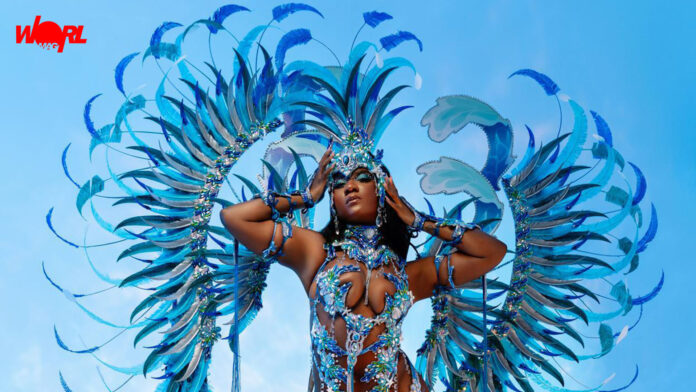
KenVee Design is more than a fashion label — it’s a cultural statement shaped by heritage, craftsmanship, and fearless creativity. Founded by a London‑based architect‑turned‑designer who began by creating pieces to reconnect with his Guadeloupean identity, the brand has evolved into a bold force in carnival, swimwear, and modern cultural fashion. As he shared, “I started designing clothing that I wanted to wear for myself… I would design clothing that reflected my identity by incorporating madras fabric.” From hand‑crafted featherwork to innovative use of traditional fabrics, KenVee Design blends structure, storytelling, and style — all while championing individuality and cultural pride.
Can you tell us how and when KenVee Design first came to life?
The idea came to life years ago when I started designing clothing that I wanted to wear for myself. I was living in London and missed my own culture, so I would design clothing that reflected my identity by incorporating madras fabric. People saw what I was doing and asked me to make things for them, so I did a few things here and there and eventually I setup a business so I could sell my clothing to people more easily.
What inspired the name KenVee — does it hold a personal or creative meaning?
I always wanted to have my name as a brand. The original designs I was working on had a distinctive “V” shape of fabric in them, so I just put the two together. Over time as demand and popularity have increased, people have put more emphasis on it being a wordplay of “envy” but that wasn’t my original intention. I like that people have taken the name and put their own spin on it.
Were you always interested in fashion and design, or did the journey begin elsewhere?
I’ve always been interested in creative professions. I am a qualified architect, so now instead of designing buildings I design clothing and carnival costumes. There are many of the same aesthetic and structural challenges to overcome. You can have the best design idea, but if it won’t stand up then you can’t get very far so I still find myself answering the same challenges of how am I going to make this work structurally?
What was the first piece you ever designed, and how did it make you feel seeing someone wear it?
Well, as I said, I started designing for myself originally and so the first person to wear my design was me! And it made me feel great! I felt like I was expressing an important part of my identity and heritage which made me stand out and be different.
What gap or need did you see in the market that motivated you to start your own brand?
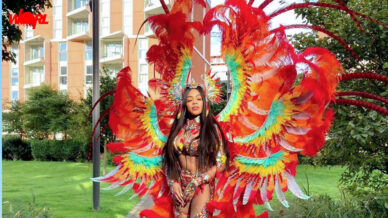
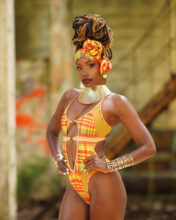
The gap I see is modern clothing that reflects the cultural heritage of places and people. I have used traditional fabrics in many of my designs, such as using the Madras fabric of Guadeloupe, my home, in shirts, t-shirts and swimwear. It’s about taking that traditional meaning and making it relevant to a new audience in a modern everyday context.
Who were your biggest influences or mentors during your early days in fashion?
For my street wear designs I am inspired by my uncle as a child. I would see him sewing for school uniforms and I remember admiring his skill and feeling inspired to do it myself.
For my carnival work I’ve been very lucky to have a Paul O’Donoghue, the owner of United Colours of Mas, as my mentor. He has taught me a lot, not just about design and creativity but also about running a business and a carnival band section. He gave me the opportunity to design and lead my first section for carnival at Notting Hill in 2022.
What challenges did you face when starting out, especially as an independent designer in the UK?
As a new independent designer in the UK my biggest challenge was building a brand that people feel like they can trust. That’s why I place so much emphasis on the quality of my designs and the service I give to people.
How did you finance and build your first collection or costume line?
I financed my first carnival section on my own. It required some very careful balancing acts to make the finances work but I was very lucky to have such supportive masqueraders who made it a huge success by selling out the section.
How has your Caribbean or cultural background influenced your design approach?
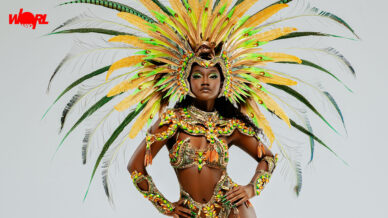
I like to try and be modern with my designs but I also feel it is important to be respectful to culture and heritage. That’s why I will often use traditional fabrics in my designs, but place them in a new context, for example by putting them on lycra instead of cotton. This can be a difficult balancing act though because I don’t want to be disrespectful to the cultures where those fabrics come from.
Looking back, what would you say was your first real “breakthrough moment” for KenVee?
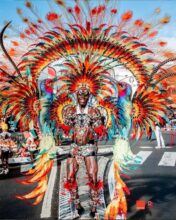
There have been a few stand-out moments for me. I still remember my first online order which felt like a huge breakthrough moment at the time, I’ve seen my designs on stage for Miss Universe and that was also very emotional and I remember being on the road with my first carnival section for Notting Hill which was a very proud moment, especially after so much hard work over many months, hand-making each individual piece of featherwork.
How would you describe the KenVee Design aesthetic in three words?
Confident. Unapologetic. Sexy.
What inspires your collections — music, culture, travel, or emotion?
Its a bit of everything really. Music can be a powerful motivator for me. Culture inspires me and I combine this with travel, where I take traditional ideas and put them in a new context. What happens if take that shape, colour or texture and put it into a different context?
How do you balance creativity with practicality when designing for carnival or custom wear?
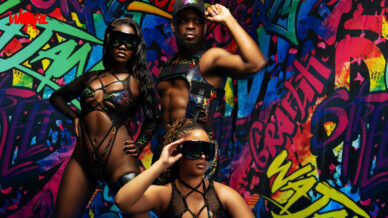
I listen to masqueraders and customers. The design always has to look amazing, but I also think about the experience that people will have. If the backpack is going to be big, I think of creative ways to keep it light and comfortable such as using different materials or having thicker shoulder pads. For swimwear, I offer thigh bags for women, and shoulder harnesses for men. The harnesses are something I am very proud of and they are unique because usually men just get a t-shirt and I wanted to offer them something that was more of an experience. I balanced that by offering the harness, which gives them somewhere to keep their phone. The harnesses have been very popular.
What’s your design process like from concept to finished piece?
Well there’s usually an overall theme that I am working to and then I have a specific idea from that theme. Past themes for Notting Hill Carinval for example include Amazonia, where I took inspiration from the Anaconda. We also had a theme for the Great Silk Road and I took inspiration from Silla Kingdom, an ancient pivotal Korean dynasty. From the theme I look-up images related to my subject and then begin to create a colour palette. From there I sketch a few designs and iterate towards a final product, using key shapes and features that I have identified in my research as anchors for the design. It’s a long process and it can be slow and frustrating at times, but it’s very rewarding to see the final product and to construct that into a prototype. For
Do you prefer designing custom one-of-a-kind pieces or ready-to-wear lines?
Custom piece are by far my favourite. There’s an opportunity to get to know the person I am designing for and create a piece that really lets them express themselves through the design.
You’ve built a strong presence in carnival and swimwear — what drew you to those categories?
I was drawn to swimwear because of the structural design aspect, I love finishing a piece and seeing it fit the mannequin perfectly. It’s satisfying to see that, because it validates all the design work, the grading and pattern making that I did before. People have told me that lycra is a difficult fabric to work with but I prefer it over any other material.
Tell us about your experience designing for Notting Hill Carnival — what does carnival mean to you?
For me carnival is about being together and celebrating the people who have paved the way for us to be here now. That celebration can look different in Notting Hill compared to a more traditional carnival in Guadeloupe for example, but it’s the same feeling of coming together and celebrating who we are and the people that got us here.
What materials or craftsmanship details do you prioritize to make your designs stand out?
For me it’s about quality, I want my designs to still look good at the end of the carnival. That means using materials that will survive the excitement and energy of carnival. I have had masqueraders hang my pieces on their walls at home after carnival is finished and that’s a real tribute not just to my designs, but to the quality of my craftmanship and the material choices I make.
How do you ensure that every KenVee piece empowers the wearer and reflects individuality?
What are some behind-the-scenes realities that people might not see in your design journey?
Working with materials can be tough on your hands. There’s hot glue, bending and cutting wire, a lot of drawing and cutting out, sometimes thousands of pieces of fabric. It can be punishing on your body, especially your hands. People see the finished product and they don’t see the burns from the hot glue.
The hours of pattern making and the overall design process can be slow and detailed. It’s not just a case of drawing a design and then sewing it together. Taking a design concept from a drawing, and turning it into a pattern so that I can sew it together and make it a reality is skilled and time consuming work.
How has your brand evolved since launching in 2020?
The brand has really established a confidence in the past few years that it didn’t have before, and I think that’s a reflection of my own journey as a designer. When I look back at the designs I was producing a few years ago I can see my own growth since then and that’s one of the things that I love about this work, I keep learning and get to apply what I’ve learnt directly to my next project to see how it works in practice on a living breathing costume.
What have been some of your proudest moments so far — collaborations, features, or clients?
My proudest moment is actually one that took place behind closed doors. I was visiting my mom in Guadeloupe and I was also working on a project while I was there. It was the first time she saw my work and I think it really helped her to understand what I mean when I say to her that I am “working”. She said she is very proud of me for everything I have achieved.
How has social media, especially Instagram, shaped your brand’s growth and visibility?
Social media has been great for showcasing my work and helping people to understand what I am capable of offering and for them to show me pictures of past designs that they want for inspiration. It’s like an archive of my achievements and that’s a nice thing to have just for my own awareness as much as for public visibility.
What role does the Caribbean diaspora play in your brand’s story and community?
Its an opportunity for me to share my heritage and culture and Kenvee is a vehicle to showcase and expose people to the French Carribean culture that’s a part of my identity.
Sustainability and ethics are hot topics in fashion — how does KenVee approach this?
I try to be very sustainability focused. The business park where Kenvee is based actually shares this value with me and it’s a big part of the reason for deciding to base business there. My design studio is a reused shipping container which is a key feature of the development and a lot of the power for the site comes from solar. I’ve also experimented with sustainability in my designs; I took used jeans and used them to make a patchwork denim fabric which I created into a patchwork denim coat. It taught me a lot about how old products can be given new life.
What challenges have you faced balancing creativity, business, and personal life as a designer?
I haven’t really found it possible to have a balance just yet. I am still a solo designer and I don’t have a team yet so I believe that there has to be a lot of sacrifice. If you believe in something and want it to succeed then you have to be prepared to work hard for it and unfortunately that has meant a lot of sleepless nights and missed parties. And I would do it all again, gladly.
How do you handle the pressure of deadlines for major events like Carnival or fashion shows?
I wish I could say that it’s down to good organisation and starting production early, but even when I have done those things there’s always a last minute rush and a few sleepless nights needed to get it over the line. I am very lucky to be surrounded by very supportive friends and family who can volunteer their time to help me when it’s really stressful and that’s always a huge help and I am very grateful to them.
How would you describe the KenVee woman or man — who are you designing for?
I try to design for everybody and be inclusive in my designs, promoting body positivity and peoples own unique identity. Whilst I might have an idea of what I want people to look like in my creations, I have to accept as a designer that people will use my designs to express themselves and their own identity and sometimes their vision will differ from mine. I love that as a part of the process because sometimes people can really surprise me and take my design and do something with it that I hadn’t intended.
What’s the message or feeling you want people to experience when wearing your designs?
I want people to feel confident and to be themselves. I am not trying to impose any identity or experience onto people, I want my design to bring out of them whatever they feel inside and give them the confidence to express themselves, fully and unapologetically.
What’s next for KenVee Design — where do you see the brand in the next 5 years?
For carnival wear, I think the brand will continue to mature as I continue to learn. I am designing for my first international carnival this year which will showcase my work to a different audience and establish my reputation as a creative, confident and reliable designer. For my ready-to-wear lines I really want to get setup with a physical shop. Selling online is good, but selling to people face-to-face is different, the customer feels how to the product fits them and as the creator I get that immediate feedback through their reaction.
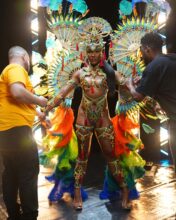
KenVee Design stands as a testament to passion, perseverance, and the power of cultural expression. Whether crafting intricate carnival costumes or modern ready‑to‑wear pieces, the designer’s mission remains clear: to empower people to feel confident, authentic, and unapologetically themselves. As he beautifully put it, “I want my design to bring out of them whatever they feel inside and give them the confidence to express themselves, fully and unapologetically.” With international carnivals ahead and dreams of a physical storefront, the next chapter of KenVee Design promises even more innovation, visibility, and cultural impact.